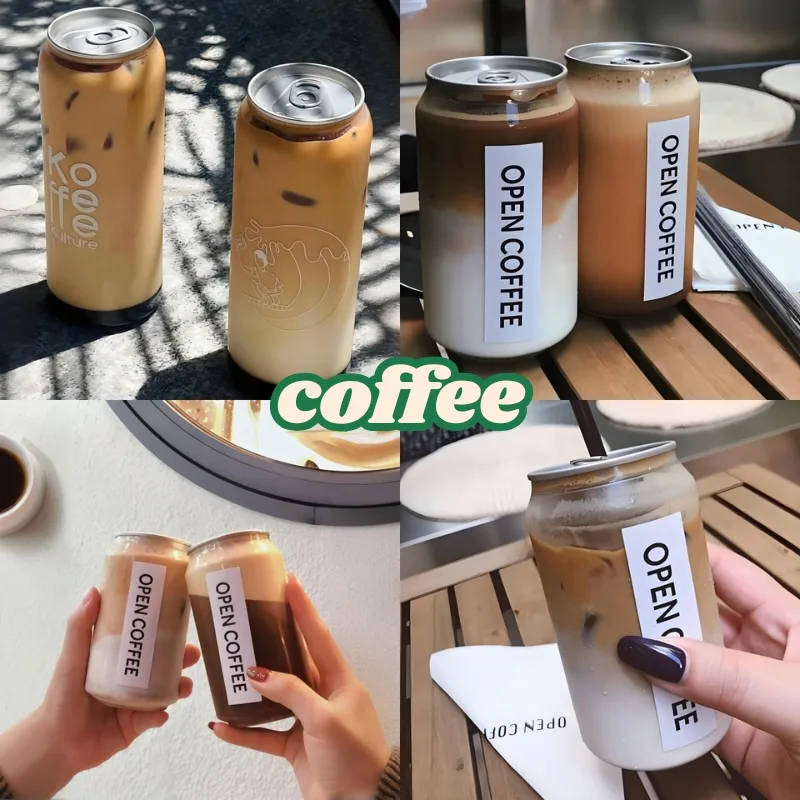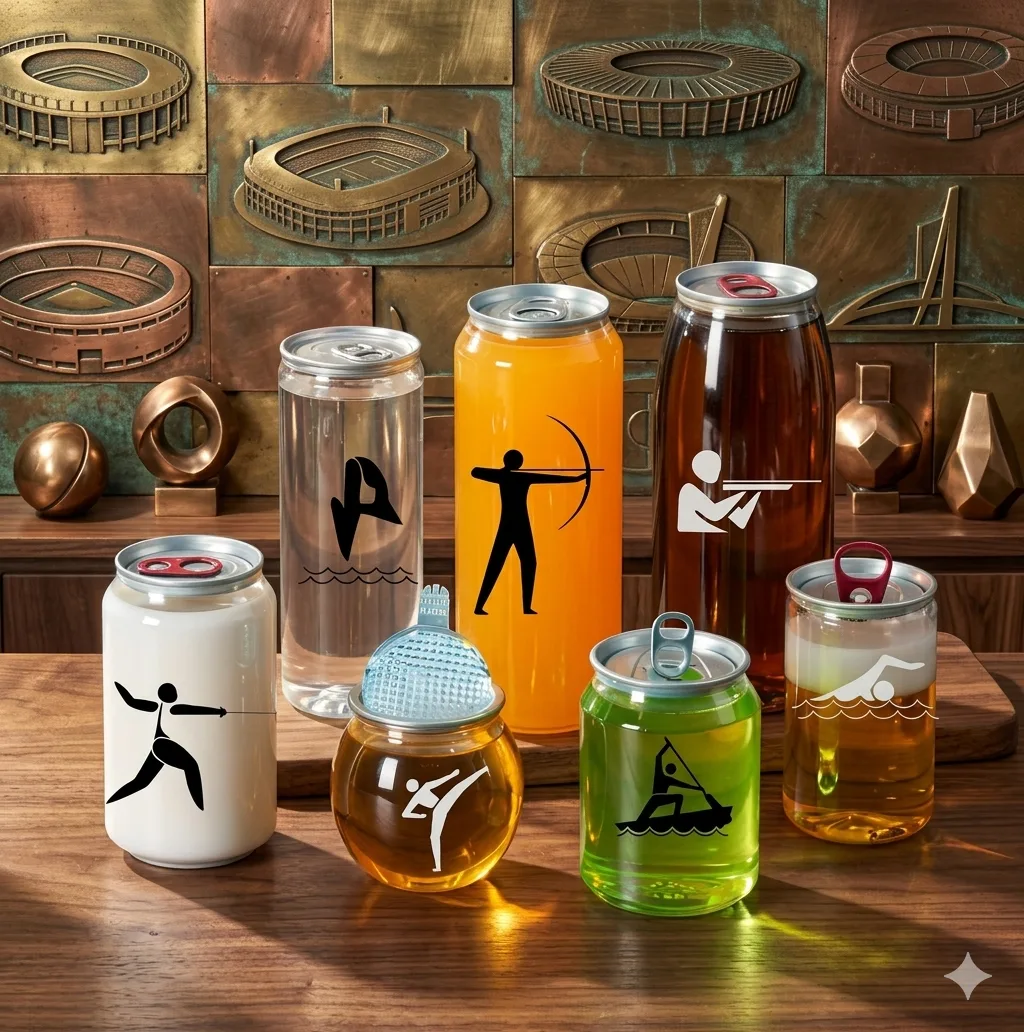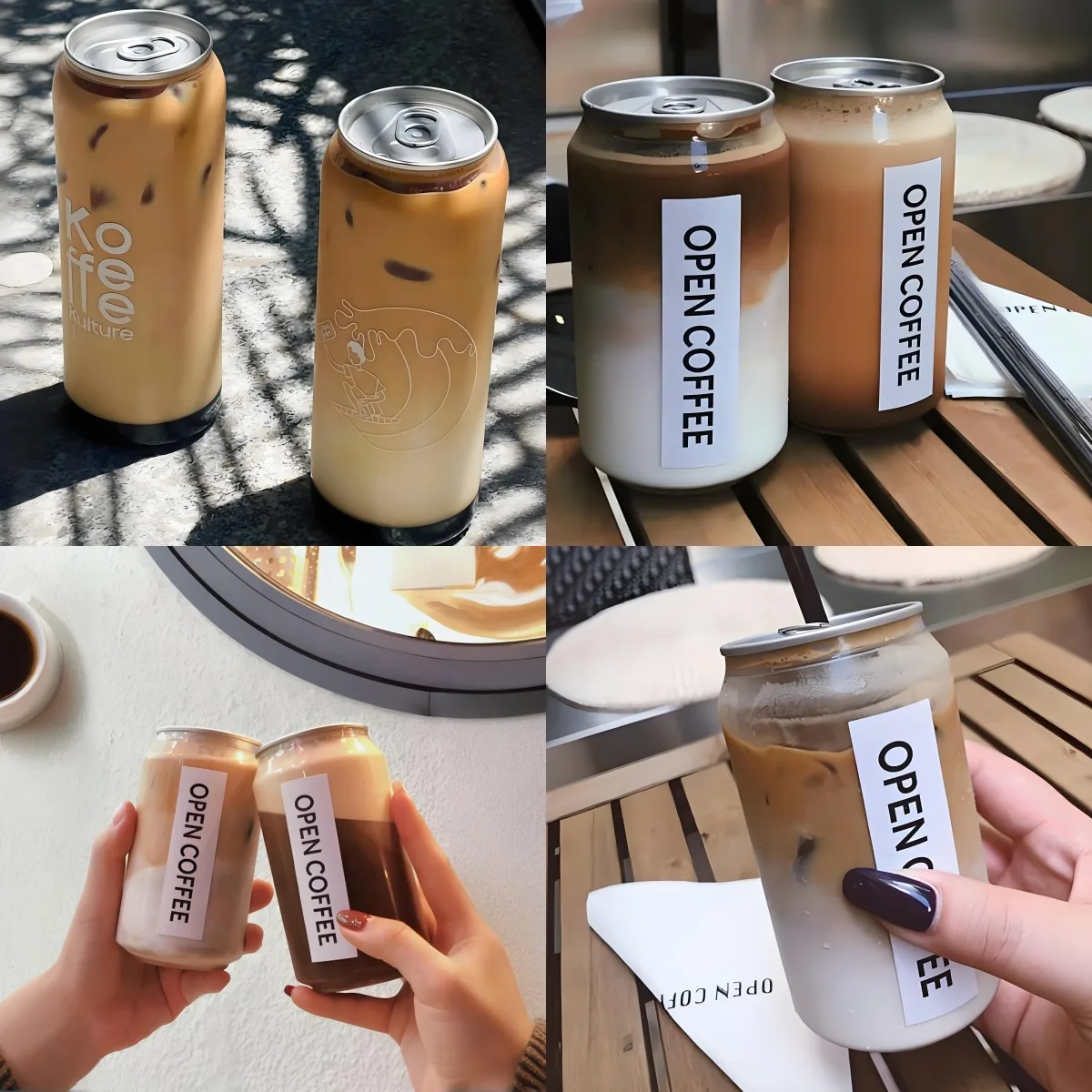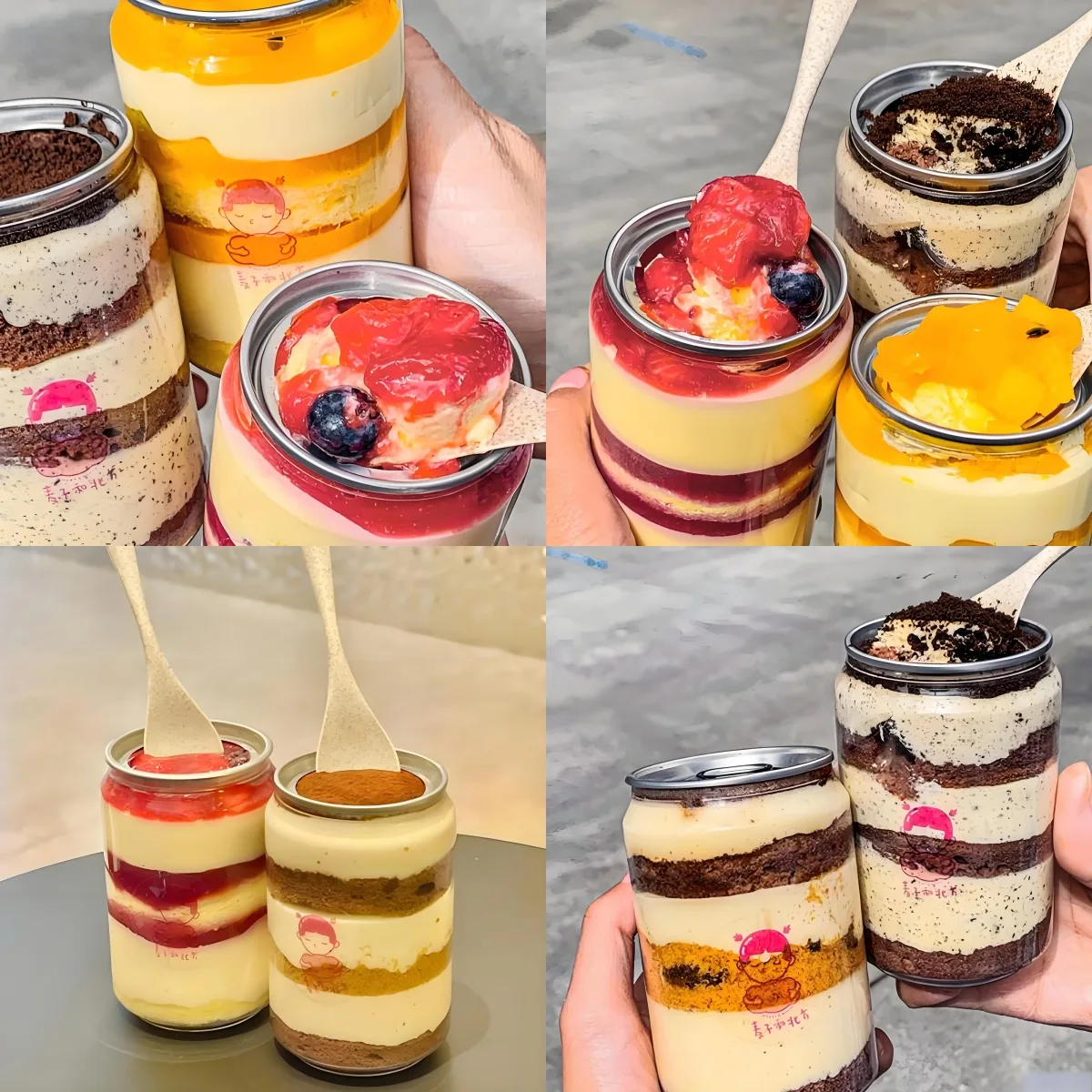
When a bakery asks us to package a layer cake, the spec starts with the cake, not the can. Here are the diameters, heights, and wall grades we manufacture for fragile structures, plus the sealing and custom-print options we run on the same line.
Here’s how to get the spec right.
Step 1: Match the Can Diameter to the Cake
A layer cake in a can is built bottom-up: sponge, filling, frosting, repeat. The can diameter decides your portion.
| Can diameter | Best for | Typical portion |
|---|---|---|
| 65–75 mm | Single-serve mini cakes, mousse | 1 person |
| 85–99 mm | Standard personal cake | 1–2 people |
| 99–120 mm | Sharing / gift format | 3–4 people |
Don’t overfill. Leave 8–12 mm of headspace below the lid so the top layer isn’t compressed during capping and stacking.
Step 2: Pick the Lid
Two lid styles dominate the category:
- Aluminum easy-open (ring-pull) lids — the “cake in a can” look. Consumer pulls the tab, scoops straight from the can. Best for D2C and retail.
- Snap-on plastic lids — cheaper, resealable, good for in-store bakery and repeated access.
For a product that travels, the aluminum easy-open lid also gives you a tamper-evident seal out of the box.
Step 3: Lock in Shelf Life
A PET can extends life, but only if the recipe cooperates. Two rules:
- Tune moisture. High-water fillings (fresh fruit, custard) shorten refrigerated life. Aim for recipes validated at 7–14 days in the can.
- Keep it cold. Canning pushes shelf life from hours to days — it does not remove the need for refrigeration. Cold chain is still non-negotiable for cream-based cakes.
PET’s barrier is good enough for short-shelf-life fresh cakes. For long-life retail kits, you’d move to retort or dry formats instead — a different product entirely.
Step 4: The Five Specs That Decide Success
When you source PET cake cans, check these:
- Clarity — crystal-clear PET shows layers; haze kills the impulse buy.
- Wall rigidity — thin but stiff walls survive stack pressure in transit.
- Lid seal integrity — no leaks, no oxygen ingress on the cream layer.
- Food-grade, BPA-free resin — non-negotiable for EU and North American retail (see our compliance guide).
- Printability — a clean surface for custom labeling or direct printing.
Step 5: Prototype Before You Scale
Because cake-in-a-can is still a trend format, the smart move is a small pilot. Run a limited seasonal batch, photograph it, post it, and read the response before committing to volume. With low MOQs, that’s now a realistic path for a micro-bakery — not just a national brand.
Clear PET cans turn a fragile dessert into a shippable, photogenic, single-serve product. CHINPK supplies food-grade, BPA-free PET cake cans in the diameters above, with aluminum easy-open or snap-on lids. See the can range, or ask us about custom sizing and printing.