A layered dessert built inside its own container has become one of the most practical formats in modern baking. The guest peels back the lid and eats from the vessel; the container does the structural work, holding soft sponge, loose compote and soft cream in place, and then doubles as the serving dish.
For a bakery, a delivery-first dessert brand or a co-packer, the interesting decision is not the recipe. It is the container, because that choice decides what the product can survive: a courier route, a warm car, a shared office fridge, or a hand delivery across town. This page covers what the format is, when it earns its place, and why food-contact PET has become the default choice over glass and aluminium.
What Is a Cake in a Can?
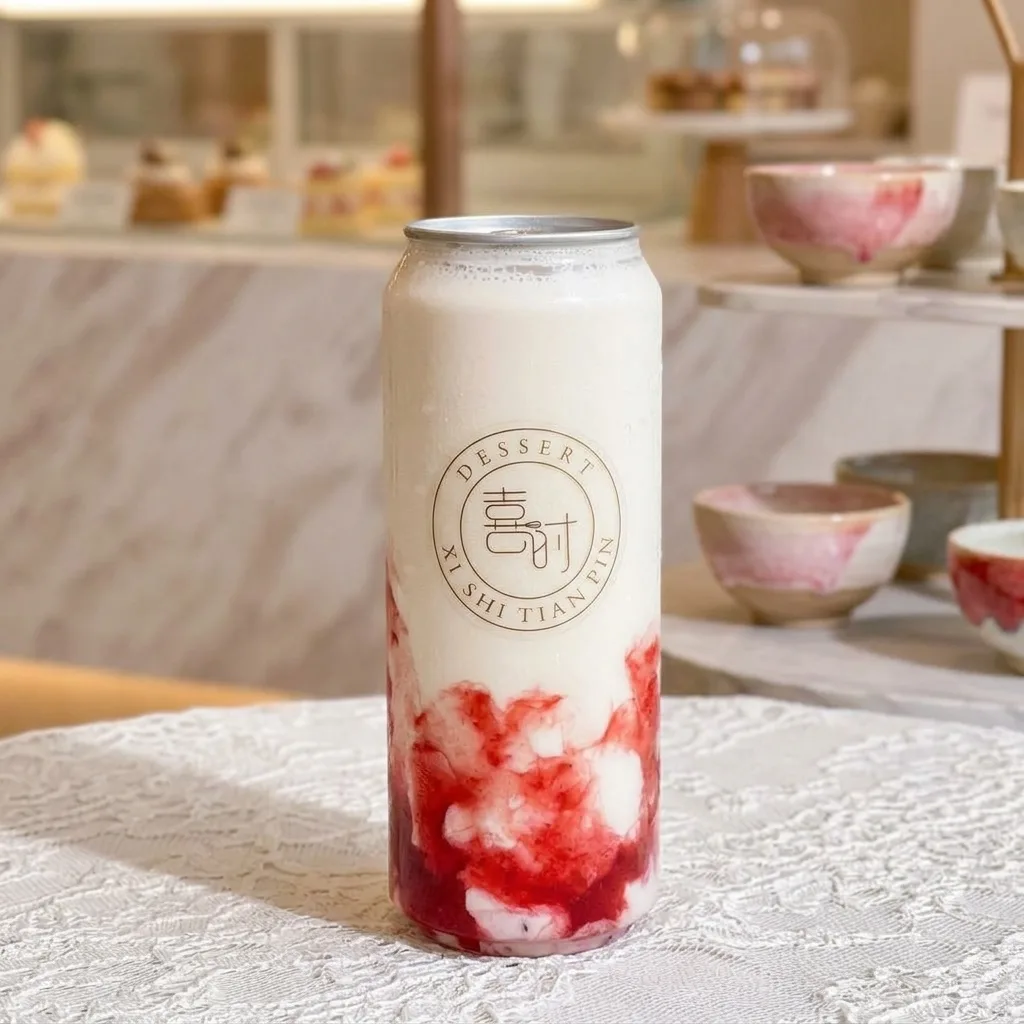
A cake in a can is a layered dessert assembled vertically inside a single-portion container. A typical build runs from a base of syrup-soaked sponge, through a middle layer of mousse or fruit compote, to a top layer of whipped cream, ganache or toasted nuts. The sealed lid protects the dessert in transit and in storage, and refrigeration keeps it fresh.
The rigid wall is what makes the recipe possible. Because the container carries the load, a baker can use softer, wetter elements that would collapse in a free-standing slice. The enclosed space also limits exposure to air, so the sponge stays tender rather than drying at the cut face.
That is the point worth holding on to: the container is not packaging wrapped around a dessert. It is the architecture that lets the dessert exist.
Plastic Cans vs Glass Cans vs Aluminium Tins
Three container types dominate the market, and they are not interchangeable once logistics, cost and customer experience enter the picture.
| Glass can | Aluminium tin | PET can | |
|---|---|---|---|
| Visibility of the layers | Full | None, fully opaque | Full |
| Weight for the same volume | Highest | Lowest | A fraction of glass |
| Breakage in courier transit | Shatters, total loss | Dents, and a dented seam can leak | Resists impact without shattering |
| Light protection | None | Complete | None, unless a sleeve blocks it |
| Unit cost at small volume | Highest | Middle | Lowest |
| Where it fits | Dine-in, hand-delivered gifts | Ambient gift sets, light-sensitive fills | Delivery, e-commerce, cold chain |
Glass offers undeniable visual appeal. The layers show through, and the weight signals a premium product. For a dine-in setting or a gift carried by hand, it works beautifully. But glass is heavy and fragile, and in delivery the breakage cost is not only the replacement product: it is the complaint and the damage to the brand. It also adds to shipping weight on every single order.
Aluminium tins are light and block light completely, which protects the vivid colour of fruit curds and other sensitive fillings. Removing the lid creates a small moment of surprise. The trade-off is that the customer cannot see the layers before opening, and visibility is much of the merchandising power of this format. Tins also dent, and a dent at the seam can compromise the closure.
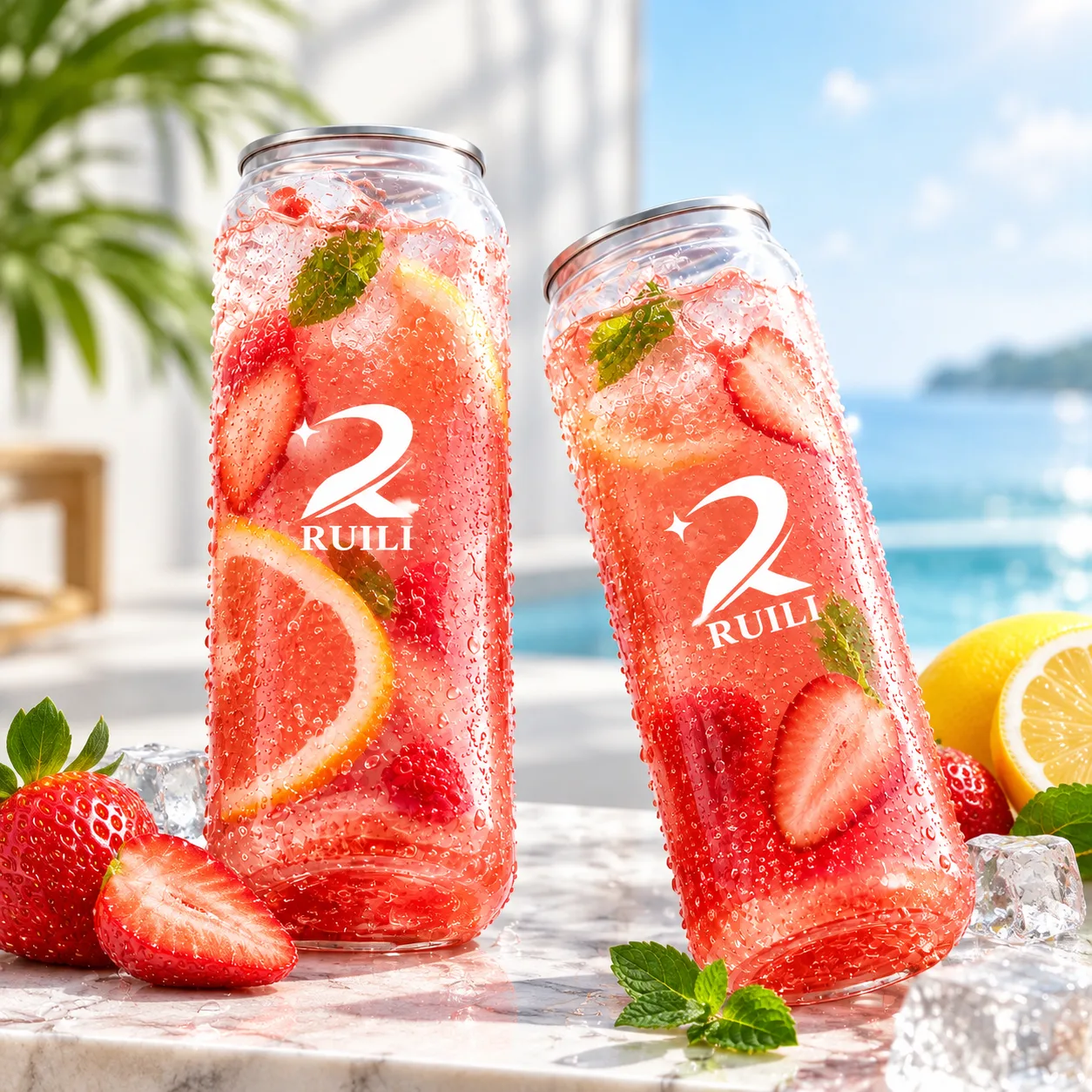
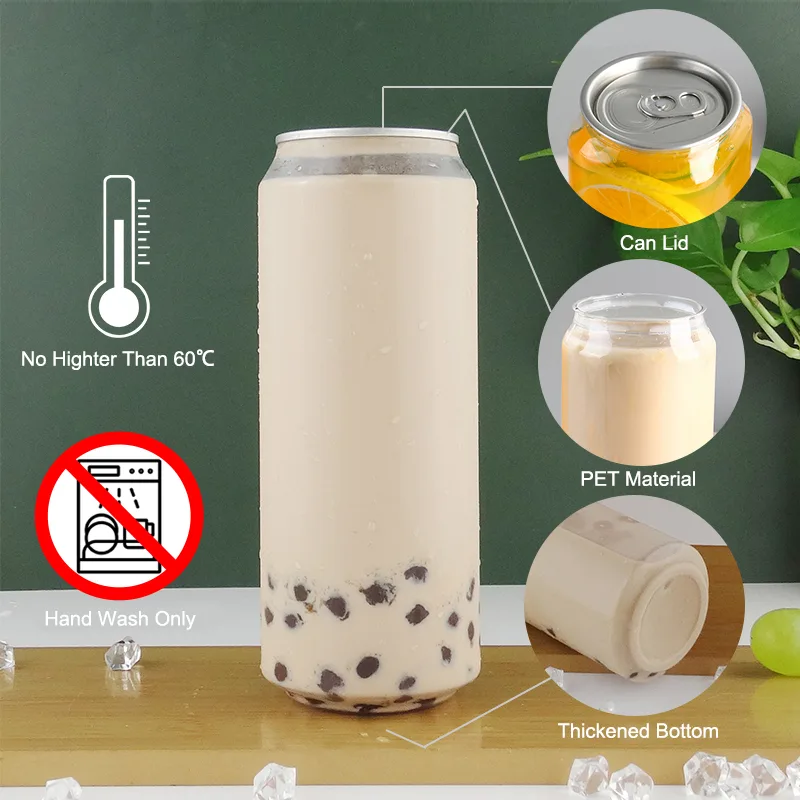
PET is the balance point. It is light, so a can costs a fraction of the glass equivalent to ship. It is shatter-resistant, which turns transport from a risk into a routine step. It is transparent, so the sponge colour, the cream texture and the compote layer all stay on display. It is food-contact grade and BPA-free by chemistry, and it does not carry odour or flavour into the dessert. It is also the cheapest of the three at small volume, with the most flexible minimums.
For most independent dessert brands selling online or through delivery, that combination is the practical answer. Our own range splits along closure type: the transparent PET cake can at 330 ml and 500 ml takes easy-open, flat or dome lids, and the clear PET can range with aluminium ends runs 200 ml to 1000 ml on a standard 202/206 finish. Every size is rated -30°C to 60°C, which covers freezer, chilled cabinet and a warm delivery van.
When the Can Format Makes Sense
The format earns its place wherever logistics, space and differing preferences create friction. Five situations come up again and again.
Office celebrations. Workplace birthdays usually mean awkward slicing in a breakroom with paper plates that buckle. Individual cans let each colleague take a portion, eat at a desk if they are busy, and put the rest in the fridge without ceremony.
Outdoor and casual gatherings. Picnics, barbecues and warm-weather parties are hard on a buttercream finish. An enclosed dessert protects the product from heat, humidity and insects until the moment it is eaten.
Compact living spaces. Fridge space is scarce. A small cylinder tucks into a corner, sits on a door shelf, or stacks neatly, where a large bakery box dictates the whole shelf.
Mixed preferences. One cake cannot satisfy a group that wants chocolate, vanilla, fruit and coffee. Separate cans let the host order a mix, and every guest gets exactly one thing.
Gifting. A whole frosted cake sent to one person or a couple is simply too much. A sealed can is sturdy, looks considered, and reads as a complete present. For corporate orders it also removes the need to find a knife and plates for an entire team.
These are end-consumer situations, and they are the reason a brand stocks the format at all. The buyer is not solving for a party. The buyer is selling into all five at once.
How to Serve a Cake in a Can
Serving technique is worth writing onto the pack or the product page, because it changes whether the customer orders again.
Temperature. Most layered desserts with dairy, mousse or fresh fruit need constant refrigeration. Eating one straight from the coldest part of the fridge mutes the flavour, though. Ten to fifteen minutes at room temperature lets the sponge soften slightly and the cream release its aroma.
Eat from the can. The entire purpose of the format is to eat it from the vessel. Scooping it onto a plate produces a messy, unappealing pile. The layers are built to be taken vertically.
Use a long spoon. A dessert spoon or a standard teaspoon is enough. The first bite should go all the way to the bottom, so the base sponge, the middle filling and the topping arrive together and the texture contrast works as designed.
Flavours and Layer Combinations
Vertical construction allows texture contrasts that would weaken a freestanding bake. A baker can use heavily saturated syrups, loose curds and very soft creams without worrying about the dessert holding its shape on a plate.
Classic builds pair a light vanilla sponge soaked in strawberry syrup with chopped fresh berries and mascarpone cream. Chocolate versions work as a dense brownie base, a light milk chocolate mousse and a scatter of cacao nibs for crunch. Coffee is the strongest performer of the three, because the base sponge absorbs a large volume of liquid without collapsing, which is exactly what a tiramisu-style can with espresso-soaked sponge and mascarpone requires.
In a clear can the layers are visible before the first spoonful, and that preview is part of the product. It is also part of what drives the repeat order.
What to Check Before You Order
Four practical factors decide whether the format works on the day, whether you are buying for an event or producing for sale.
Headcount. Count the guests exactly and order one unit per person, plus one or two spare.
Allergens. Individual containers make dietary restrictions easier to accommodate, but separate packaging is not protection against cross-contact in a shared kitchen. Confirm allergen handling with the producer rather than assuming it.
Transport. Stacking flat, sealed cans in a car or handing them to a courier is far safer than moving a tall, fragile cake. This is where PET earns its price: it handles routine courier treatment without the breakage risk of glass.
Storage at the destination. Check the fridge space before ordering. Cylindrical cans take a fraction of the room a large square bakery box demands.
If you are the one producing, four specifications belong on the purchase order before anything else: the capacity in millilitres, the closure type, the temperature range the product will actually meet, and the minimum order quantity. The 210–650 ml clear dessert can with a PP cap starts at 200 pieces, which is enough to test a flavour or a single retail account without committing resin to a production run.
When Individual Portions Beat a Full Cake
Sometimes stepping away from the single centrepiece is simply the logical choice. Individual portions are more practical when guests have different preferences, when there is no formal sit-down meal, or when the dessert has to survive a journey. They also suit cocktail parties, networking events and casual afternoon teas, where a guest can hold a can in one hand and talk, which is close to impossible with a plate and fork.
A short framework for the decision:
Choose a full-sized cake when the visual impact of a centrepiece is needed for photographs, the event includes a formal cutting ceremony, every guest is happy with one flavour, and the gathering is seated with plates and forks to hand.
Choose the can format when guests differ in flavour or dietary needs, the event is casual and people are standing or moving, the dessert must travel safely over a distance, you want to avoid cutting and plating, or you are sending a gift to a small household or a busy office.
Frequently Asked Questions
What is cake in a can?
A layered dessert built directly inside a single-portion container, usually alternating sponge, cream, fruit and syrup. The rigid container supports the soft ingredients and then serves as the eating vessel.
Why choose plastic cans over glass?
They are lighter, shatter-resistant and cheaper to ship, and they keep the transparency that makes the layers visible, without the breakage risk or the weight penalty. For delivery and e-commerce dessert businesses, that is usually the deciding combination.
Are plastic cans safe for food?
Food-contact grade PET is BPA-free and approved for food contact, and it does not impart odour or flavour to the dessert. Source from a supplier who can show the material grade and the food-contact documentation for the specific can, not just for the resin family.
How should cake in a can be stored?
Keep the cans refrigerated until shortly before serving, especially where fresh dairy, cream or fruit are involved. The sealed lid keeps the sponge from drying out and stops the dessert from picking up other odours in the fridge.
Can plastic cans be reused?
Yes. Food-grade PET can be washed and reused for dry storage once the dessert is gone. Some brands make this a selling point, since a can that stays in the customer’s kitchen keeps the brand present long after the cake is finished.
Is this format suitable for office celebrations?
It is one of the best fits. There is no cutting, no spatula and no stack of paper plates. Colleagues take a can, eat at their own pace, and store what they cannot finish in the office fridge.
On Our Line
We mould the can bodies and hold the moulds in-house, so the capacity, the wall and the closure are specified together rather than sourced from three catalogues. Cake-can bodies run 330 ml and 500 ml with easy-open, flat or dome lids, and the aluminium-end range covers 200 ml to 1000 ml on 202/206 finishes. PP-cap formats start at 200 pieces, aluminium-end formats at 1,000, with a 15–25 day lead time and a pre-production sample signed off before the run.
The Bottom Line
Cake in a can is not a trend. It is a format that solves real problems: portion control, transport safety, flavour variety and serving simplicity. The container decides how well each of those problems gets solved.
Plastic cans offer a combination glass and aluminium struggle to match: transparency without fragility, lightness without losing protection, and cost efficiency without giving up presentation. For an independent dessert brand building a delivery-first business, that is hard to beat.
If you are producing cake in a can, the can is not a commodity line item. It is the first thing your customer sees, the last thing they touch, and the vessel that carries your brand from the kitchen to the table. Specify it that way.
Send us the capacity, the fill, the closure you want and the temperature the product will meet in transit, and we will come back with the can and lid that fit.